Have you seen those ASMR videos on TikTok where people organize their refrigerators so perfectly that everything looks like a Pinterest dream?
The clear bins, neatly stacked fruits, labels everywhere… and you just watch in awe—then scroll because you know your small refrigerator could never look like that.
If you’ve ever wondered how to organize a small refrigerator in a way that actually works in real life—not just for aesthetics—you’re not alone.
Maybe you’ve even tried once or twice. You bought a few containers, arranged things nicely… and two days later, it somehow went back to looking chaotic again. Things got pushed around, leftovers piled up, and suddenly there was no space.
But what if I told you… you absolutely can achieve something just as functional (and satisfying), even with limited space?
Not the unrealistic, “no one actually lives like this” version—but a real-life system that works on busy days, lazy days, and everything in between.
I’ve lived with small kitchens and tiny fridges more times than I can count. The kind where you have to move three things just to get to one. And trust me—this isn’t about having a big fancy fridge. It’s about using what you have intentionally.
It’s about knowing what you have, where it is, and making your fridge work for you, not against you.
And if you’re working with a small space overall, you might also find these helpful:
👉 How to Organize a Small Kitchen
👉 How to Create and Organize a Small Kitchen Pantry
So if your fridge currently feels overcrowded, messy, or just stressful to open… you’re not alone.
Let’s fix that cluttered fridge once and for all.
Why Your Small Refrigerator Feels So Chaotic
A small fridge doesn’t give you room to be careless. If things are not intentional, they quickly become overwhelming.
Here’s what usually happens:
- You can’t see what you already have
- Items get pushed to the back and forgotten
- Leftovers pile up until they become “mystery containers”
- You keep buying duplicates because you didn’t know you already had some
And before you know it, your fridge is full—but somehow, you still feel like you have nothing to eat.
That’s not a space problem. That’s a system problem.
Step 1: Empty Everything (Yes, Everything)
I know this sounds like a lot, especially if you’re busy or tired—but this is the reset your fridge needs.
Take everything out. Not just a few items—everything.
As you do this:
- Throw away anything expired or spoiled
- Be honest about leftovers you’re never going to eat, i know there is sentiment around wasting food, thats why you need to really organize your refrigerator to avoid wasteage.
- Group similar items together (dairy, drinks, sauces, produce)
This step alone is eye-opening. You’ll probably find things you forgot existed or items that should have been thrown out weeks ago.
And suddenly, your fridge already feels lighter.
Step 2: Clean Before You Refill
Before putting anything back, take a few minutes to clean.
Wipe down:
- Shelves
- Drawers
- Corners where spills hide
It doesn’t have to be deep cleaning—just enough to give you a fresh start.
There’s something about a clean fridge that makes you want to keep it that way.
Simple tip: keep a small box of baking soda inside to absorb odors. It really helps, especially in smaller spaces.
Step 3: Create “Zones” (This Is the Game Changer)
This is where everything starts to click.
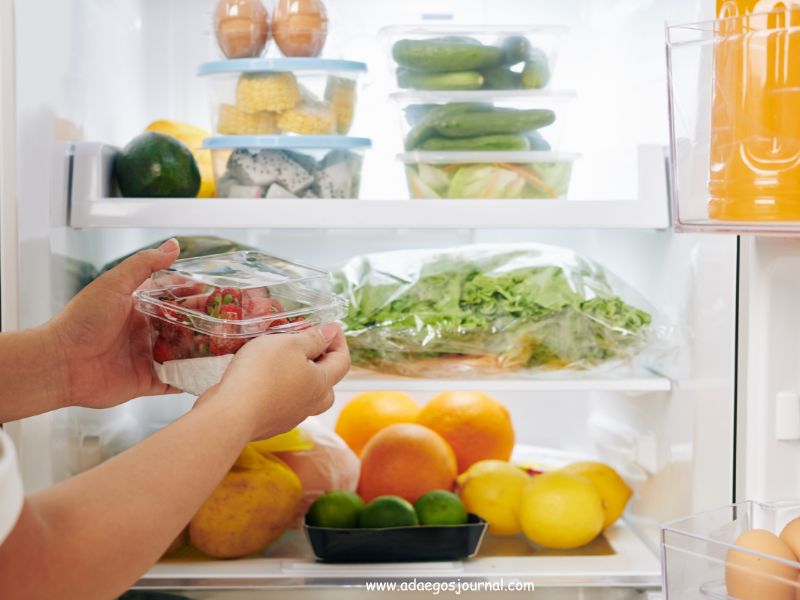
Instead of putting things back randomly, assign each part of your fridge a purpose.
Here’s a simple layout that works in real life:
Top Shelf (Ready-to-Eat Foods)
- Leftovers
- Cooked meals
- Snacks
Middle Shelf (Everyday Essentials)
- Milk
- Yogurt
- Cheese
- Eggs (if you prefer them here)
Bottom Shelf (Raw Foods)
- Raw meat or fish (always keep these contained to avoid leaks)
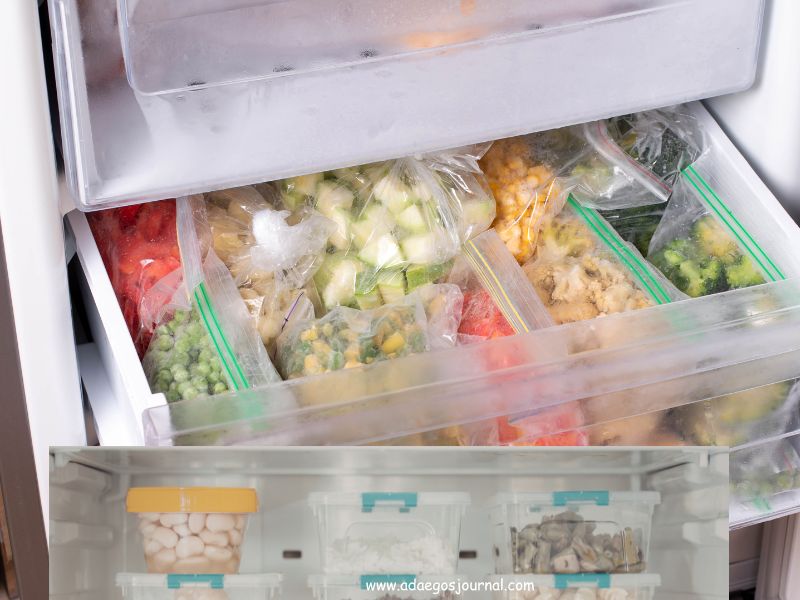
Drawers (Produce)
- Vegetables in one section
- Fruits in another
Fridge Door (Least Cold Area)
- Drinks
- Sauces
- Condiments
Once you start using zones, something shifts. You stop asking, “Where should I put this?”—because everything already has a home.
Step 4: Use Clear Containers (Your Secret Weapon)
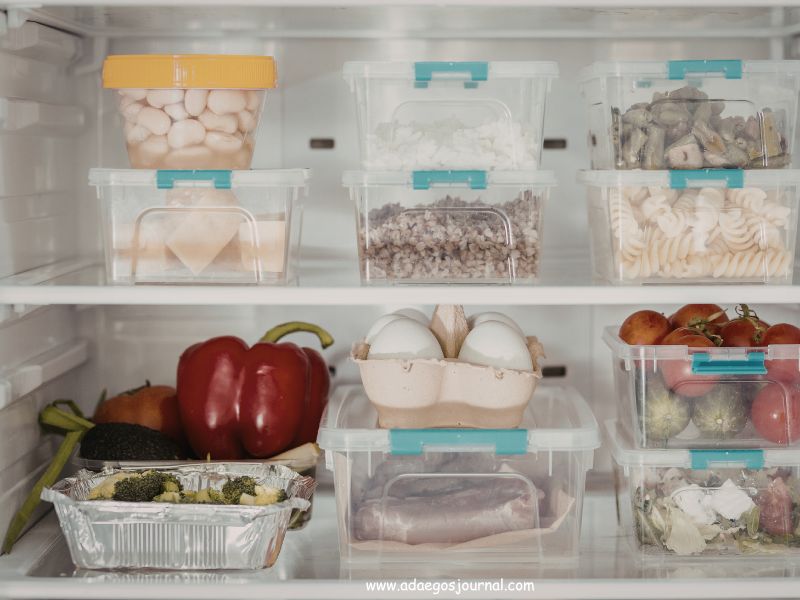
If there’s one small upgrade that makes a big difference, it’s this: clear containers.
Unlike random takeaway bowls or ice cream containers, clear containers let you see exactly what you have at a glance. No opening multiple lids just to find one thing.
So ditch those ice cream containers, because why should we even open the ice cream container thinking its ice cream only to see soup or stew in it.
Here’s why they work so well in a small fridge:
- You instantly know what’s inside
- They make everything look cleaner and less chaotic
- They help reduce food waste
- They stack neatly and save space
And the best part? You don’t have to spend a lot.
Affordable ways to get clear containers:
- Check local markets or budget home stores
- Start small—buy just 2–3 containers
- Look for multipurpose plastic bins
- Watch for supermarket discounts or bundle deals
Start simple:
- One container for snacks
- One for breakfast items
- One for leftovers
That alone can completely transform your fridge.
Clear containers aren’t just for aesthetics—they give you visibility, structure, and control.
Step 5: Stop Overpacking Your Fridge
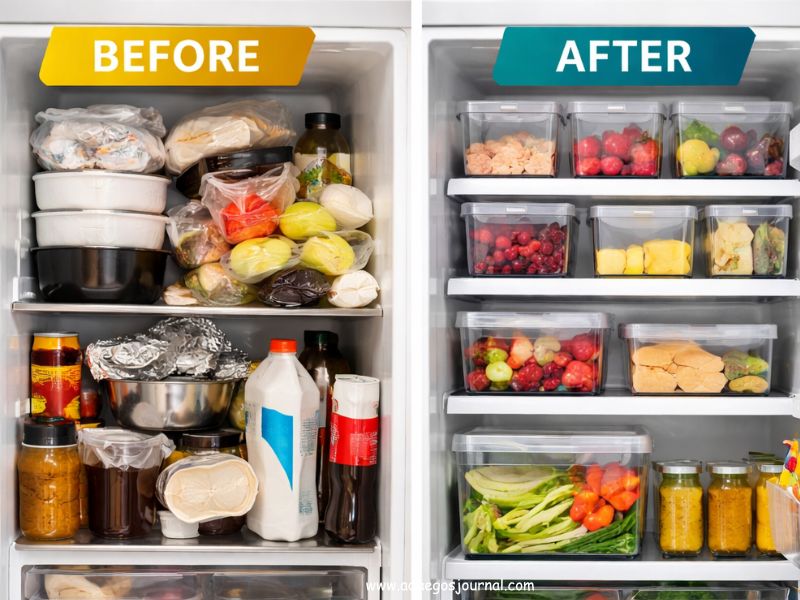
This one is hard, especially if you’re used to bulk shopping.
But here’s the truth: a small fridge cannot hold everything—and trying to force it will only create stress.
Instead:
- Buy what you need for a few days
- Do smaller, more frequent grocery trips
- Use what you have before adding more
When your fridge has breathing space, everything becomes easier:
- You see what you have
- Food lasts longer
- Cleaning takes less time
A less crowded fridge is a more functional fridge.
Step 6: Make It Smart and Pretty
Let’s be honest—we all want that clean, satisfying look when we open the fridge.
And the good news? You don’t have to choose between function and aesthetics. You can absolutely have both.
A well-organized fridge should:
- Be easy to use
- Look clean and calming
- Make you want to keep it that way
Here’s how to balance both:
- Use clear containers to create a neat, uniform look
- Arrange items based on use, not just appearance
- Avoid overfilling—space is what makes it look organized
- Keep labels simple and minimal
You don’t need perfection. You just need a fridge that feels good to open.
Because when your fridge looks good, you naturally take better care of it.
And when it’s also functional? That’s when everything clicks.
Step 7: Do a 5-Minute Weekly Reset

This is the habit that keeps everything from going back to chaos.
Once a week (pick a day that works for you):
- Throw out anything going bad
- Wipe small spills
- Quickly rearrange items
That’s it.
It doesn’t have to be perfect. It just has to be consistent.
And the best part? It takes less than 5 minutes when your system is already in place.
A Real-Life Mindset Shift
Your fridge doesn’t need to look like a viral video to be “organized.”
It just needs to work for you.
An organized fridge should:
- Help you find things quickly
- Reduce food waste
- Make cooking less stressful
That’s the real win.
Because at the end of the day, no one is coming to inspect your fridge. This is about making your daily life smoother—not impressing the internet.
Final Thoughts
You don’t need a bigger refrigerator to feel more in control of your kitchen.
You need a simple system, a few intentional habits, and tools that actually help you see and use what you have.
Start small. Don’t overcomplicate it. Use clear containers where it matters. Keep things functional and beautiful.
And next time you open your fridge, instead of feeling overwhelmed… you’ll feel calm, in control, and just a little bit proud.
And honestly? That’s the real goal.
Leave a Reply