If you’ve ever stepped on a stray Lego at 2am, or opened a closet only to have forty stuffed animals avalanche onto your head, welcome. You’re in the right place.
Kids’ rooms are chaos magnets by design — new toys keep coming in, clothes keep getting outgrown, and somehow socks multiply like rabbits.
But here’s the good news: you don’t need a Pinterest-perfect playroom or a professional organizer’s budget. These kids room organization ideas are simple, realistic, and designed for families who want less mess and more usable space. You just need systems that actually match how your kid lives, plays, and (let’s be honest) makes messes.
I’ve spent way too many weekends elbow-deep in bins, testing which kids room organization ideas actually stick versus what looks cute for exactly three days before reverting to chaos. Below are the ideas that have genuinely stood the test of time — real, replicable, and doable on basically any budget.
Start Here: The One Rule That Changes Everything
Before we get into specific hacks, there’s one principle that makes every single idea below work better: **everything needs a home, and that home needs to be obvious.**
Kids don’t clean up because they’re lazy — they clean up (or don’t) based on how easy the system is. If putting something away requires opening three bins and remembering a “logic” that made sense to you but not to a 5-year-old, it won’t happen. So as you go through these ideas, keep asking: could my kid put this away without me?
Toy Storage That Doesn’t Require a PhD to Use
1. The Bin-and-Label Combo
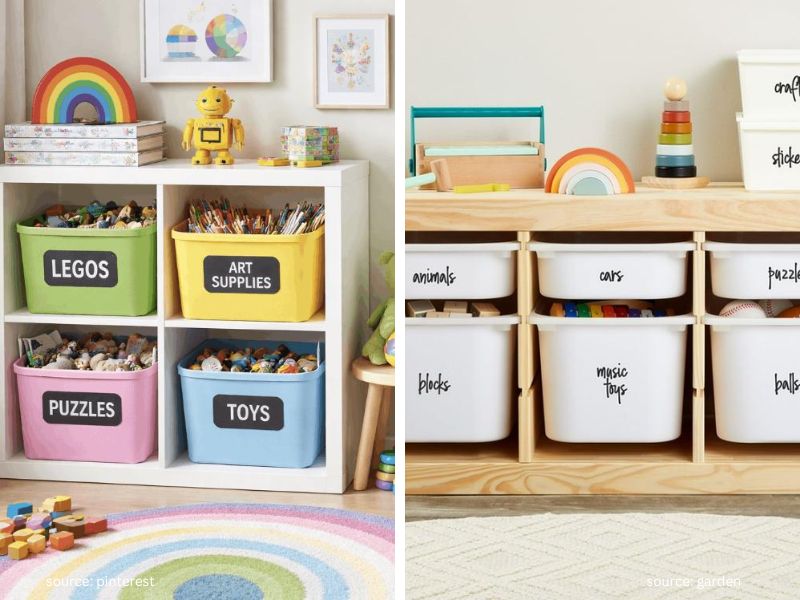
Clear bins (or bins with a picture label, not just words, for pre-readers) sorted by category — blocks, cars, dolls, art supplies. The trick isn’t the bins themselves, it’s keeping categories broad enough that a 4-year-old can make the sorting decision in two seconds. “Where does this go?” should never require a debate.
If your kids spend as much time playing outdoors as they do inside, keeping toys organized becomes even easier when you create dedicated spaces for them. You might also enjoy my guide on Backyard Play Area Ideas for fun, organized outdoor spaces that encourage active play while keeping the mess outside.
2. The Toy Rotation Hack
This one is a game-changer and barely anyone talks about it. Keep two-thirds of the toys in a closet or garage, out of sight, and only leave a third out at a time. Swap every few weeks. Kids rediscover “old” toys like they’re brand new, the room stays visually calmer, and cleanup takes a fraction of the time because there’s simply less stuff to put away.
3. Vertical Toy Storage With a Shoe Organizer
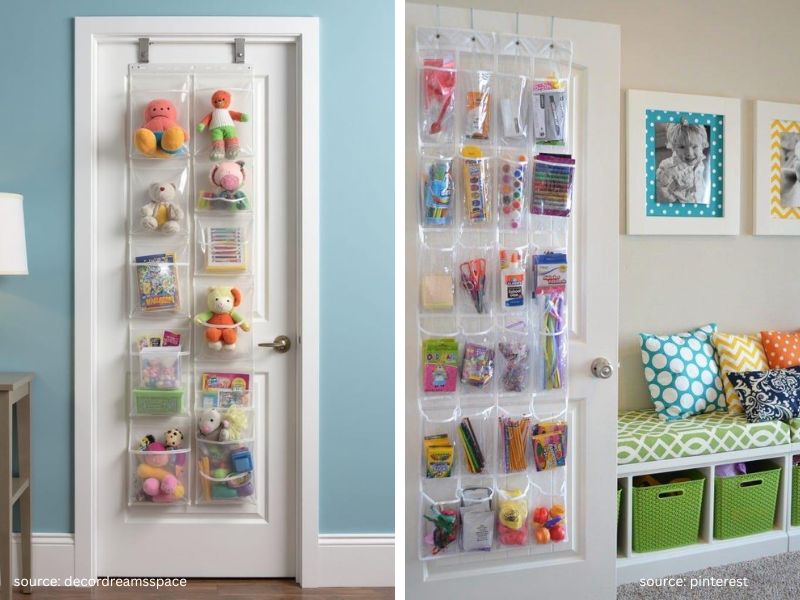
An over-the-door clear shoe organizer isn’t just for shoes. Small figurines, matchbox cars, art supplies, hair accessories — each pocket becomes its own little category, and it’s all visible at a glance, which kids genuinely love.
4. The “Loose Parts” Basket
Instead of fighting the small-piece chaos (think: random Lego pieces, puzzle bits, tiny toy parts), designate one open basket as the catch-all. It doesn’t need to be sorted perfectly. Just corralled.
Making Cleanup a Game, Not a Fight
5. Color-Coded Cleanup
Assign each bin a color, and put a matching colored sticker on the toys that belong there. Cleanup becomes a visual matching game instead of a memory test. This works especially well for kids who resist “boring” chores but love a little challenge.
6. The 10-Minute Timer Trick
Set a timer, put on a fun song, and race to see how much gets picked up before it ends. It sounds simple because it is — but turning cleanup into a beat-the-clock game removes the emotional resistance that comes with “you have to clean your room.”
7. A Designated “Everything Else” Bin
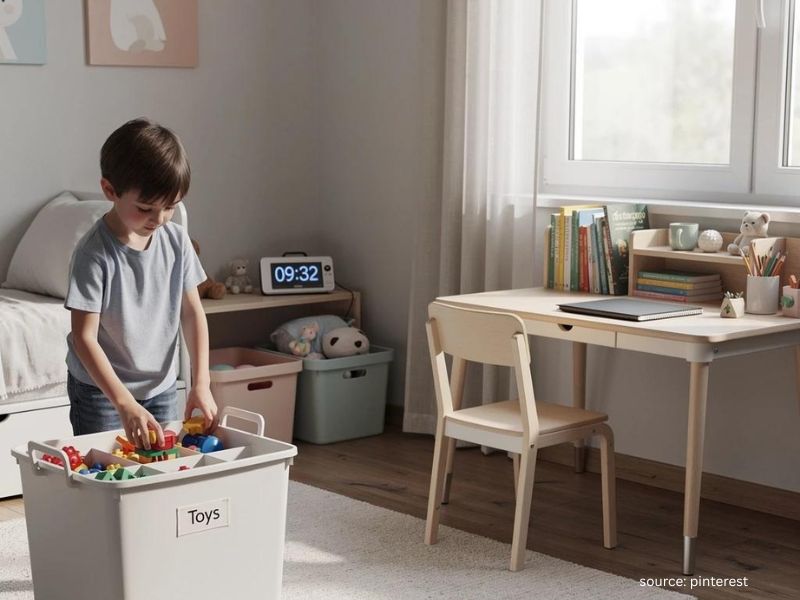
Every room needs one no-questions-asked bin for stray items that don’t have an obvious home yet. Sort it properly once a week. This alone can cut nightly cleanup time in half because kids aren’t stalling on where something belongs.
Clothing and Closet Systems Kids Can Actually Use
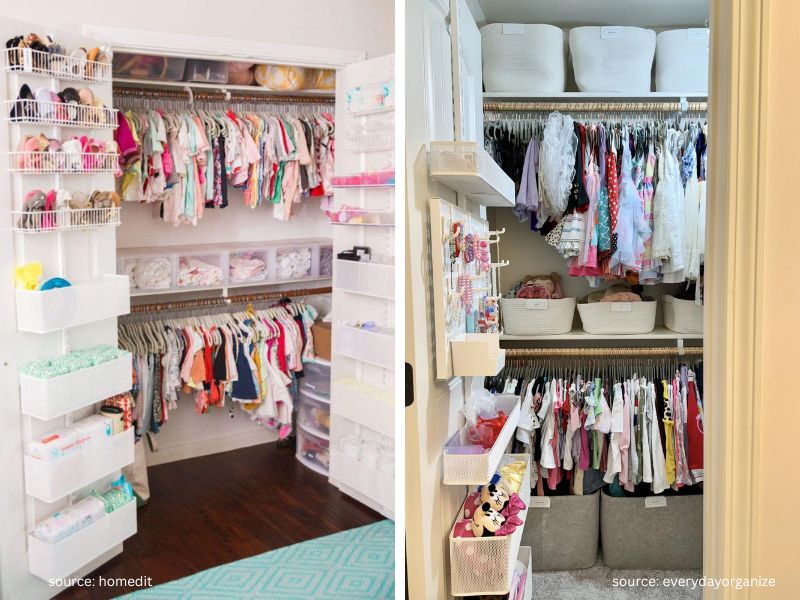
8. Lower the Bar (Literally)
Move the closet rod down to your child’s height, or add a second lower rod. If they can reach it, they can hang it — and they will, more often than you’d expect.
9. Outfit Bins Over Folded Drawers
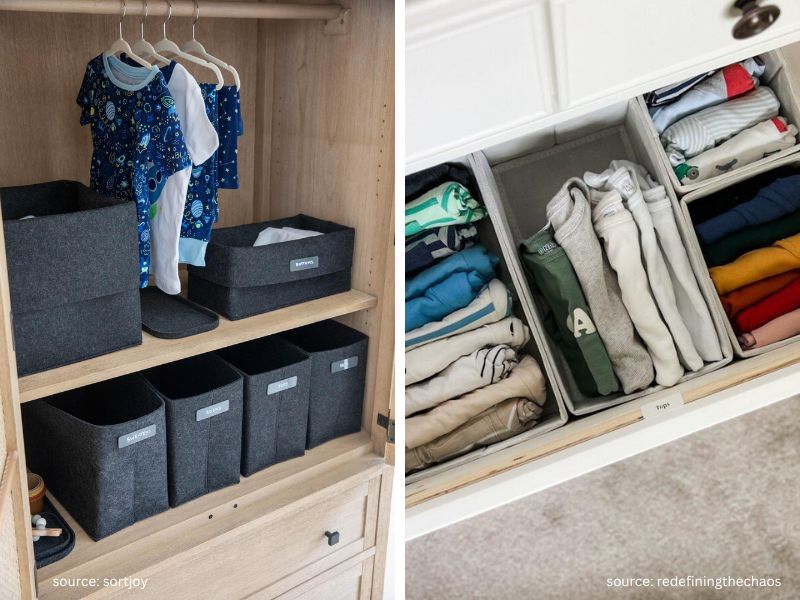
Instead of folded stacks that get destroyed the moment your kid digs for a favorite shirt, use shallow bins or drawer dividers for categories: leggings, tees, pajamas. Loose and grab-friendly beats neatly folded and instantly wrecked.
10. The Five-Outfit Hanging System
For mornings that feel like a negotiation, hang five complete outfits on labeled hooks (Monday through Friday) at the start of the week. Kids pick from what’s there — full stop — and mornings get dramatically calmer.
11. A Low Hook Row for “Worn Once” Clothes
Not every worn outfit needs to go in the hamper. A row of low hooks for jeans or sweaters that aren’t dirty yet keeps the floor clear without demanding a full fold-and-put-away routine.
Books, Art, and the Never-Ending Paper Pile
12. Front-Facing Book Displays
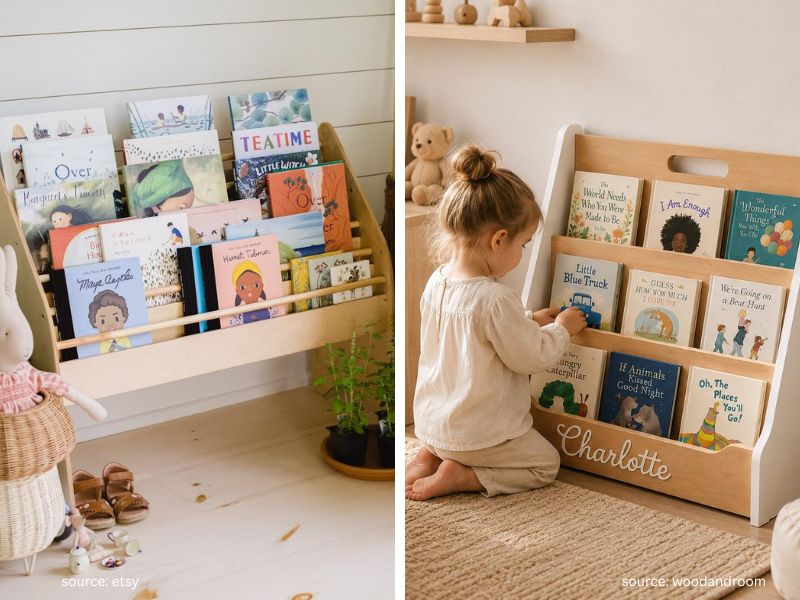
Bookshelves where spines face out are basically invisible to little kids. A simple front-facing shelf (even a repurposed spice rack) shows off covers, and kids pick books far more often when they can actually see them.
13. The Rotating Art Gallery
Pick one wall, add a strip of washi tape or a simple clip-string display, and let your child’s latest masterpieces live there — temporarily. When new art comes in, the oldest piece gets photographed (for a digital memory book) and recycled. No more guilt-tripping piles of paper you don’t know what to do with.
14. A “Keep” Box With a Hard Limit
One shoebox-sized bin per year for artwork and school papers you genuinely want to keep forever. When it’s full, it’s full — you go through and choose the best pieces. This one rule alone solves the paper clutter problem permanently.
Small Space? Here’s What Actually Helps
If you’re working with limited square footage, these kids room organization ideas will help you make every inch count.
15. Under-Bed Rolling Bins
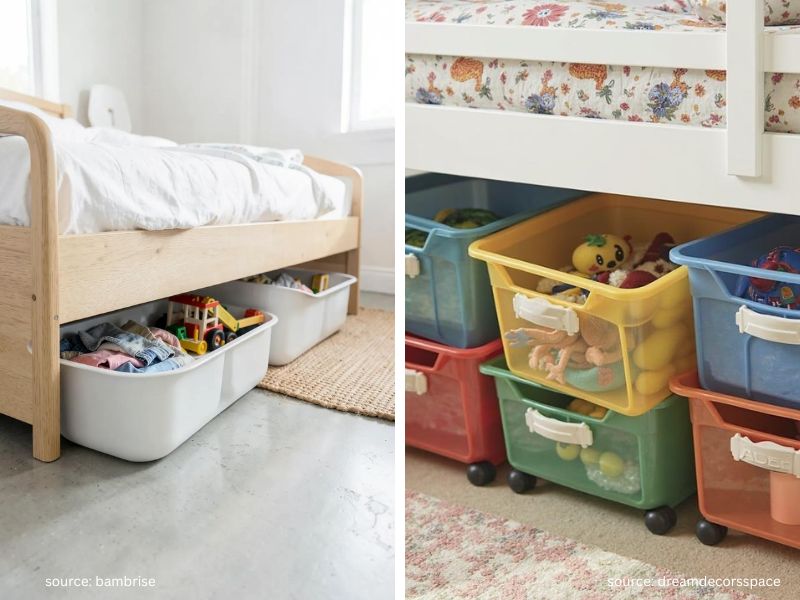
Underused prime real estate. Use low, wide bins on casters for out-of-rotation toys, extra bedding, or off-season clothes. The wheels matter — they make it something a kid will actually pull out and use, not something that gets shoved and forgotten.
16. Wall-Mounted Storage Over Floor Storage
Floating shelves, pegboards, and wall-mounted baskets free up floor space for actual play, which matters enormously in smaller rooms. A pegboard near a desk or play area can hold art supplies, dress-up accessories, or sports gear without eating into square footage.
17. A Multi-Use Loft or Bunk Setup
If the room allows it, lofting the bed opens up an entire zone underneath for a reading nook, desk, or play area. It’s a bigger investment, but for small shared rooms it can genuinely double the usable space.
Systems for Shared Rooms (Because Siblings Complicate Everything)
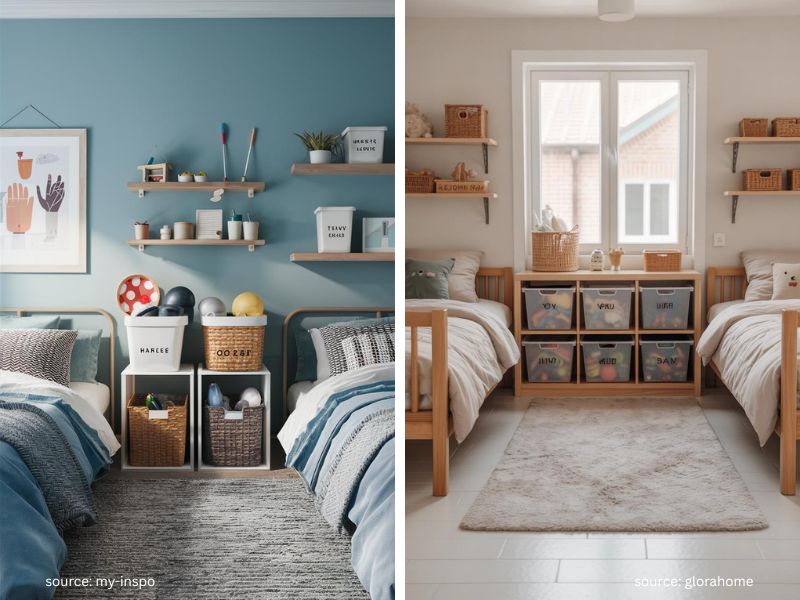
18. Color-Coded Zones by Child
Assign each sibling a color for bins, hooks, and shelves. It eliminates the “that’s not mine” arguments and gives each kid a clear sense of ownership over their own stuff, even in a shared space.
19. A Shared “Neutral Zone”
Not everything needs to be divided. Create one shared bin or shelf for toys both kids play with together, so ownership battles don’t happen over every single item.
Keeping It Going Long-Term
20. The Sunday Reset
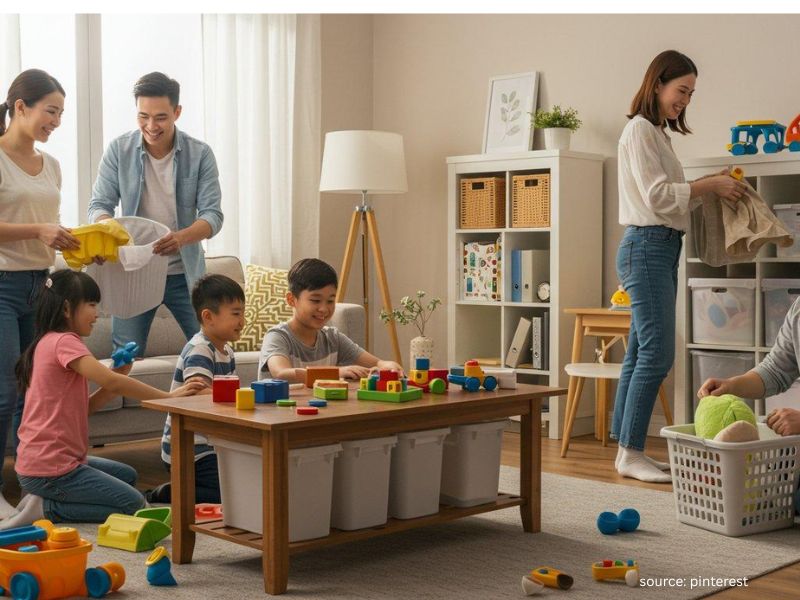
Fifteen minutes, once a week, where the whole family does a quick reset of shared spaces including the kids’ room. This isn’t a deep clean — it’s just enough to stop small messes from snowballing into a weekend-long project.
21. The One-In-One-Out Rule
Before a new toy comes in, one leaves — donated, passed down, or tossed. This is less about deprivation and more about keeping the room’s total volume manageable so all the systems above keep working instead of getting overwhelmed.
The Real Secret Nobody Tells You
Here’s the honest truth: no organization system survives contact with a genuinely messy kid unless it’s simple enough that they can run it themselves. The fanciest labeled bins in the world won’t help if putting something away takes more brainpower than a 6-year-old wants to spend at bedtime.
Start with two or three of these kids room organization ideas instead of trying all twenty-one at once — and give them a few weeks to actually settle into your family’s routine. The goal was never a magazine-perfect room. It’s a room your kid can actually keep tidy, mostly, most of the time. That’s a win worth celebrating.
What’s the biggest organization struggle in your kids’ room right now? I’d genuinely love to hear it — chances are, there’s a hack for that too.
I hope this was helpful
Thank you for Reading!!!
With Love
Adaego
Leave a Reply