If you’ve ever caught yourself scrolling through pictures of dreamy backyard playgrounds at 11pm, wondering how other parents managed to turn a patch of grass into something straight out of a storybook — I see you. I’ve been there too, half-convinced you need a professional landscaper and a budget the size of a small mortgage to make it happen.
Here’s the truth, though: you don’t. Some of the most magical backyard play spaces I’ve come across (and built myself, trial and error included) came together with a weekend, a few basic supplies, and a little imagination. Kids don’t actually need the Pinterest-perfect version. They need somewhere to dig, climb, hide, splash, and get delightfully dirty.
So let’s talk about how to actually do this — no fluff, just ideas you can start this weekend.
Why a Backyard Play Area Is Worth the Effort
Before we dive into the how, a quick word on the why, because I think it matters. Outdoor play does something screens simply can’t replicate. It builds gross motor skills, sparks imagination, and gives kids the kind of unstructured, “figure it out yourself” time that’s becoming rarer by the year. And honestly? It gives you your sanity back too. A backyard that pulls kids outside is a backyard that buys you twenty quiet minutes to drink your coffee while it’s still hot.
The American Academy of Pediatrics encourages outdoor play because it supports healthy physical and emotional development.
“The best Backyard Play Areas combine movement, creativity, and quiet play. Whether you have a large yard or a small patio, these DIY ideas can help you create an outdoor space that encourages exploration and keeps kids engaged for hours.”
Now, onto the fun part.
1. Start With a “Zones” Mindset, Not a Master Plan
The biggest mistake I made early on was trying to design one big, cohesive play area. It felt overwhelming, and honestly, it never got finished. What actually worked was breaking the yard into small zones — a digging corner, a climbing spot, a quiet reading nook, a water play area. Each zone can be built separately, on separate weekends, with separate budgets. It’s a lot less intimidating, and it lets the space grow with your kids.
Breaking the yard into small zones also makes it easier to think about how your kids use space indoors. If you’re working on creating more functional spaces throughout your home, these 21 Kids Room Organization Ideas That Actually Work (Even If Your Child Is a Tiny Tornado) can help you make the most of their bedroom too.
2. The Sandbox Upgrade: Build a “Dig Kitchen”
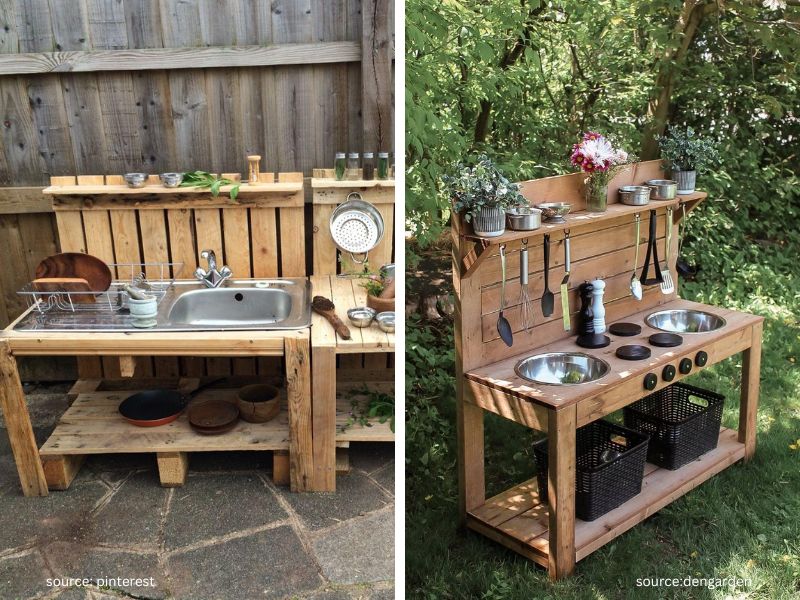
Skip the plain plastic sandbox and build a mud/sand kitchen instead. Grab an old wooden pallet or a discarded kitchen cabinet, add a few hooks for pots and pans, an old muffin tin, some wooden spoons, and a bucket of water nearby. Kids will “cook” mud pies for hours. This one is a genuine game-changer for toddlers and preschoolers especially — it’s sensory play, pretend play, and fine motor practice all rolled into one.
**Budget hack:** Check curbside pickup listings or secondhand marketplaces for a free cabinet or dresser you can repurpose. A coat of leftover exterior paint and it looks brand new.
3. A DIY Balance Beam From Scrap Wood
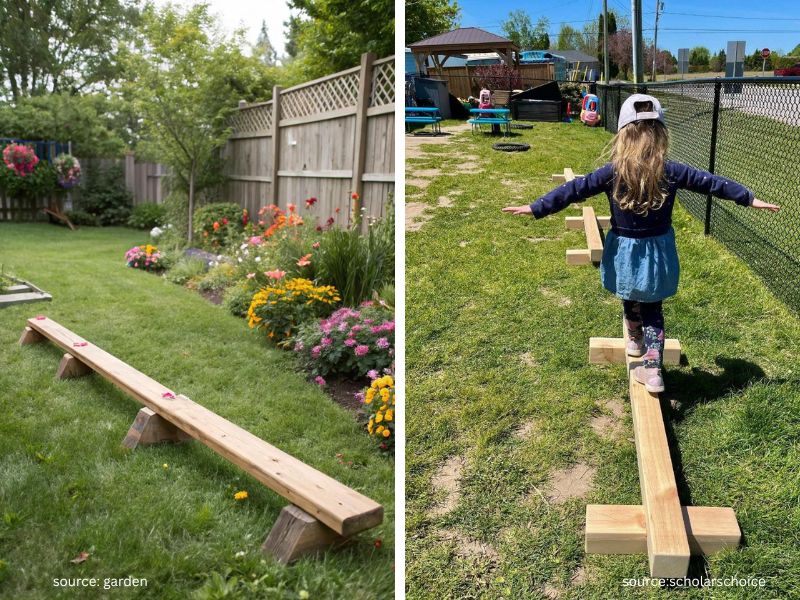
This is one of the simplest projects on this list and one of the highest-impact. Take a sturdy wooden beam (a 4×4 works great), sand down the edges, and lay it flat on the grass, or elevate it slightly on two low concrete blocks for an extra challenge. Balance beams build coordination and confidence, and kids of almost every age find a way to make it their own — walking, jumping, racing.
4. Tire Swing, Reimagined
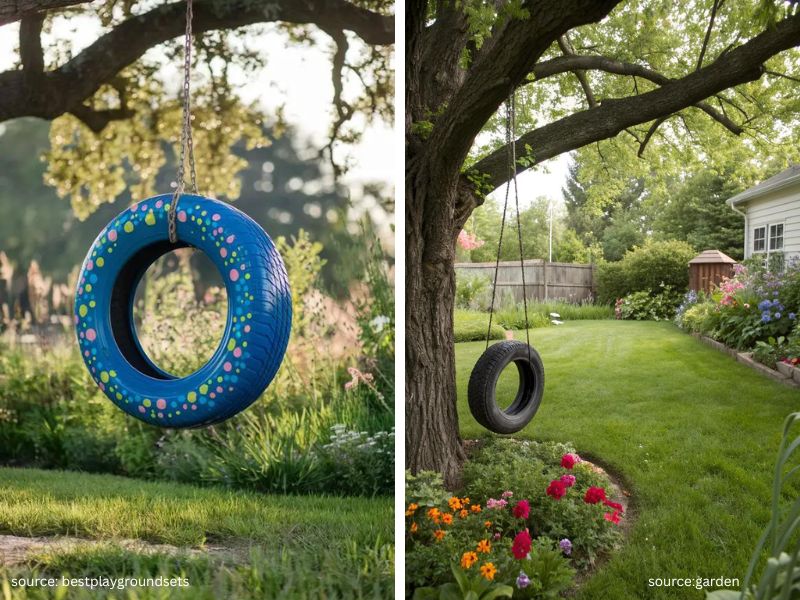
The tire swing is a backyard classic for a reason, but you can make it feel fresh. Instead of the traditional black tire, try painting it a bright color, or wrapping it in rope for a boho, textured look. Hang it from a sturdy tree branch with a heavy-duty rope rated for outdoor swings (safety first — always check weight ratings and inspect knots regularly).
5. Build a Mini Obstacle Course
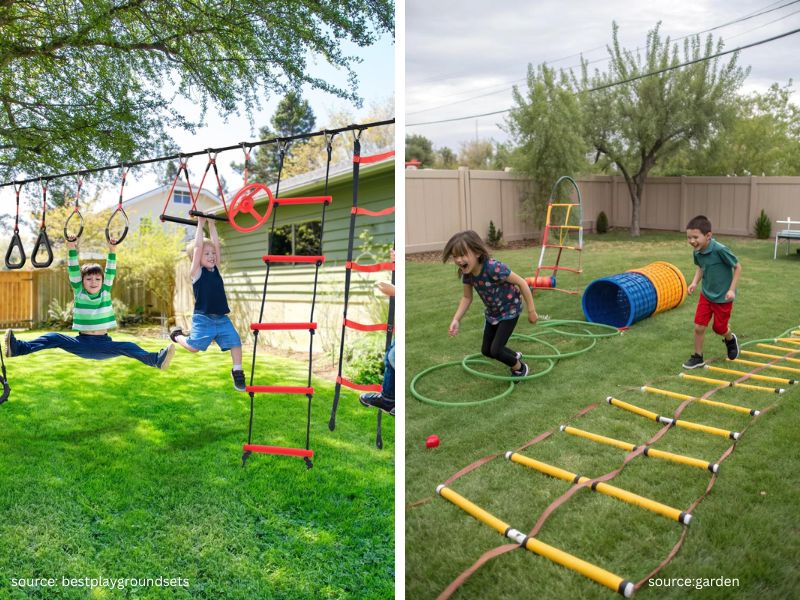
This one is endlessly adaptable and can grow with your budget. Start with what you already have: hula hoops staked into the ground to hop through, a row of stepping stones (or painted pavers) to balance across, a tunnel made from a large appliance box, and a rope strung low between two trees to crawl under. Rotate the setup every few weeks to keep it exciting — kids get bored of the same course fast, but a quick rearrange makes it feel brand new.
6. A Reading Nook, Just for Outside

Every zone doesn’t need to be high-energy. A quiet corner with a waterproof rug, a couple of weatherproof cushions, and a small shaded canopy (even a large patio umbrella works) gives kids somewhere to decompress with a book or just watch the clouds. Add a small waterproof bin nearby stocked with a rotating selection of books so pages don’t get ruined by rain.
If your kids already have a dedicated play space indoors, you can use the same idea of creating little activity zones outside. These 25+ Kids Playroom Ideas That Are Actually Easy to Pull Off are also worth checking out if you’re looking for ways to make their indoor play space more functional.
7. Chalkboard Fence Panel
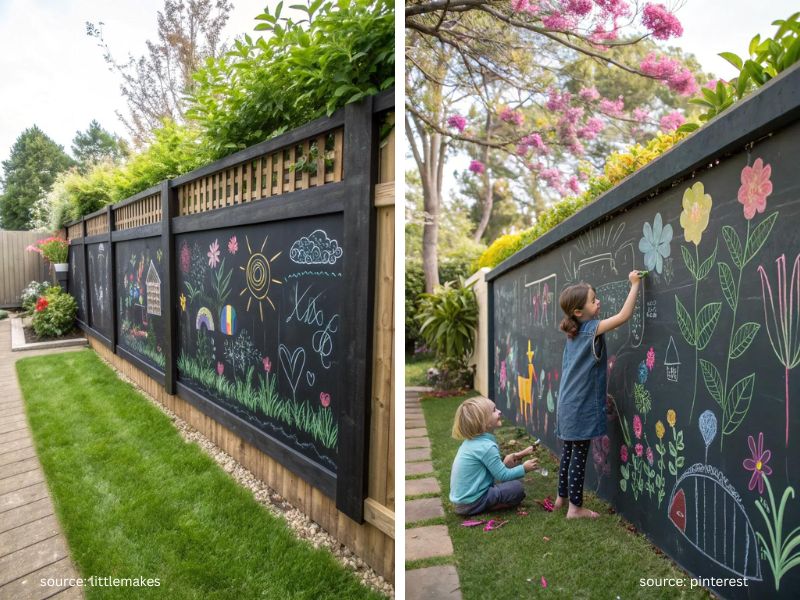
If you have a wooden fence, this is one of the easiest transformations on the list. Section off a panel and coat it in chalkboard paint (it’s inexpensive and takes about an hour to apply). Suddenly your fence becomes a giant canvas for hopscotch grids, doodles, and games of tic-tac-toe. Keep a bucket of chalk hanging nearby on a hook so it’s always within reach.
And if your little artists need even more creative activities once they’ve finished covering the fence in chalk, you’ll find plenty of inspiration in these 25+ Kids Craft Ideas That Won’t Wreck Your Living Room (Or Your Sanity).
8. DIY Water Wall
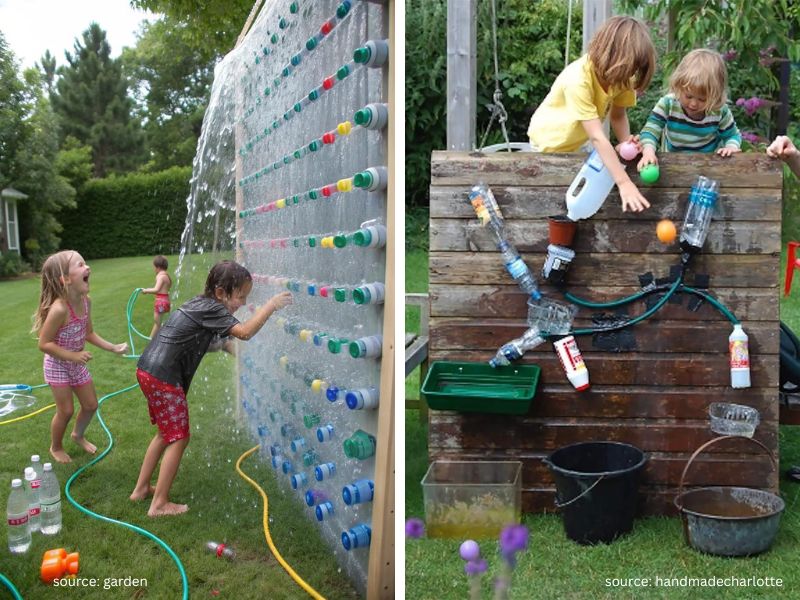
For hot-weather days, a water wall is pure magic and genuinely simple to build. Mount a few clear plastic tubes, funnels, and small containers onto an old pallet or fence panel using zip ties, then let kids pour water through the top and watch it wind its way down. It’s mesmerizing for toddlers and endlessly refillable — no plumbing required, just a watering can or hose nearby.
9. Repurpose a Trampoline Frame Without the Trampoline
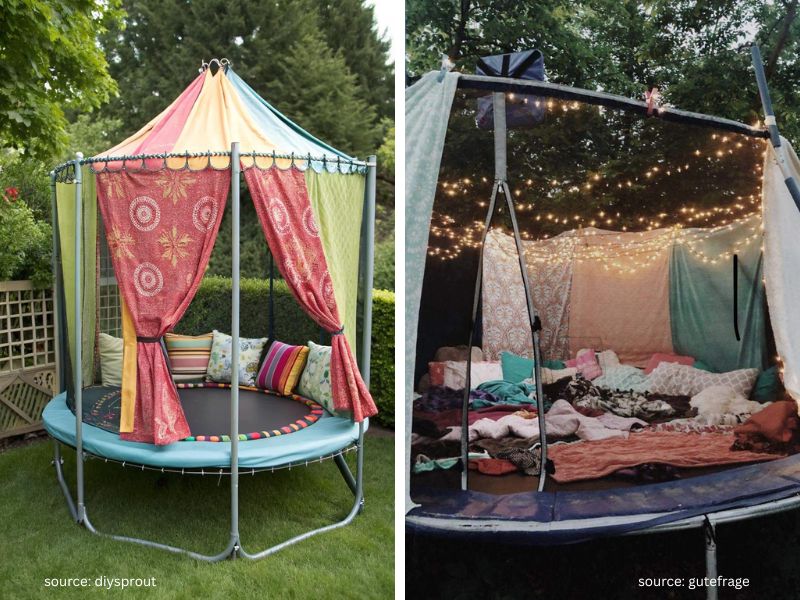
If your trampoline mat has worn out (they do eventually), don’t toss the frame. Wrap it in sturdy fabric or shade cloth and it becomes an instant fort frame, or drape sheer curtains for a magical little hideaway. It’s also a great base for hanging a canopy over a sandbox or reading nook.
10. A “Loose Parts” Play Station
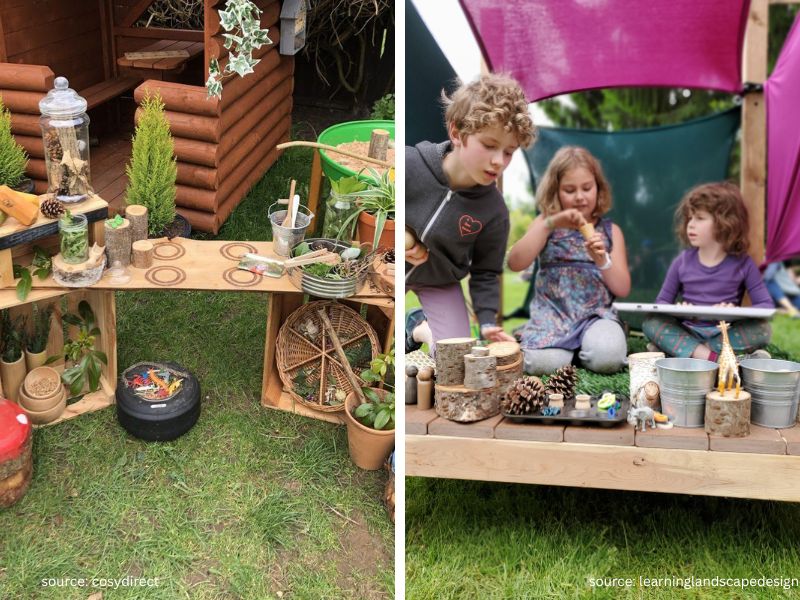
This is a concept borrowed from Reggio-inspired outdoor learning, and it’s brilliant in its simplicity. Set out a bin of open-ended materials — think smooth stones, tree cookies (sliced logs), pinecones, fabric scraps, buckets, and wooden planks — and let kids build, stack, and invent their own games. There’s no “right” way to play with loose parts, which is exactly the point. It teaches creative problem-solving in a way that pre-set toys can’t.
11. Vertical Garden Kids Can Actually Tend
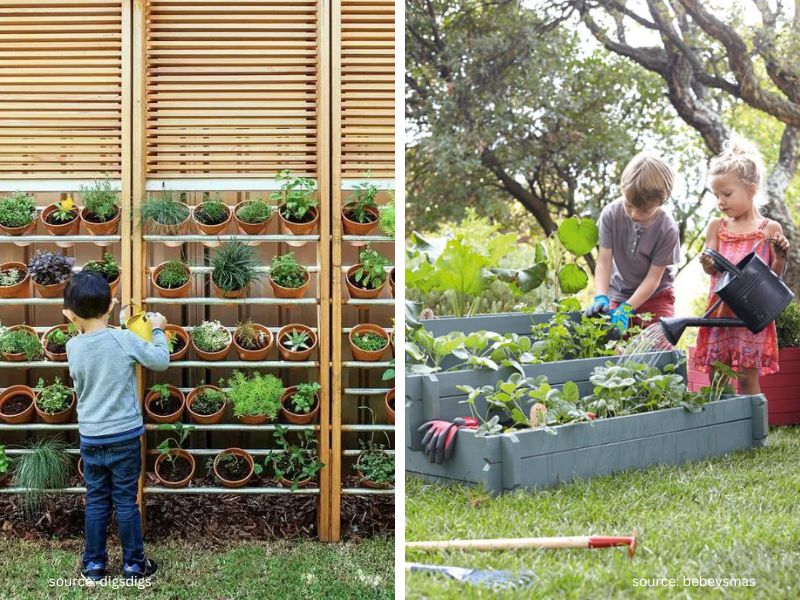
Give kids their own patch of dirt, even if it’s just a few repurposed buckets or a small raised bed. Fast-growing, kid-friendly plants like cherry tomatoes, sunflowers, and strawberries give them something to watch grow and eventually harvest. It’s a small addition that teaches patience and responsibility, and it dresses up the yard beautifully in the process.
12. Fairy Garden or Gnome Village Corner
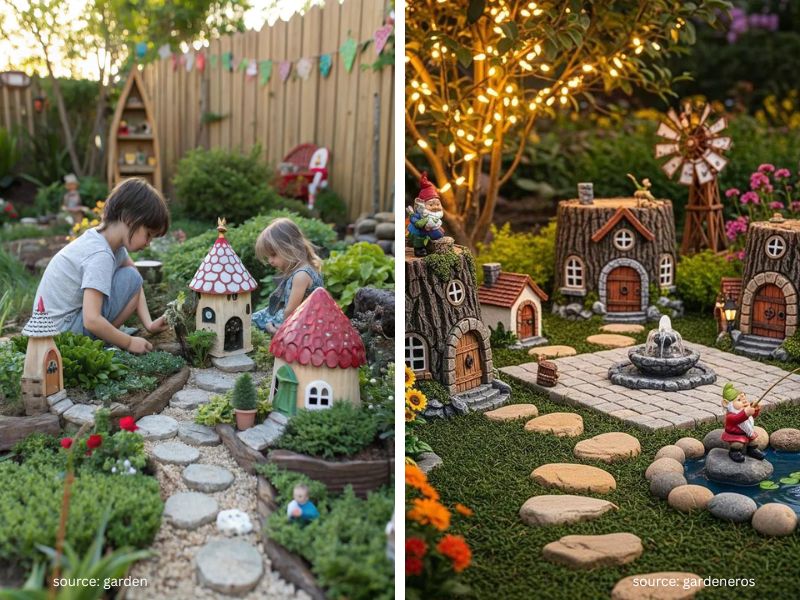
Tuck a tiny fairy garden into a shady, often-overlooked corner of the yard. A few miniature houses (easy to make from painted birdhouses or even glued twigs), some moss, and small pebble pathways go a long way. This tends to become a favorite spot for imaginative, story-driven play, especially for younger kids who love adding new “residents” to their little world.
13. Rope Climbing Net or Ladder
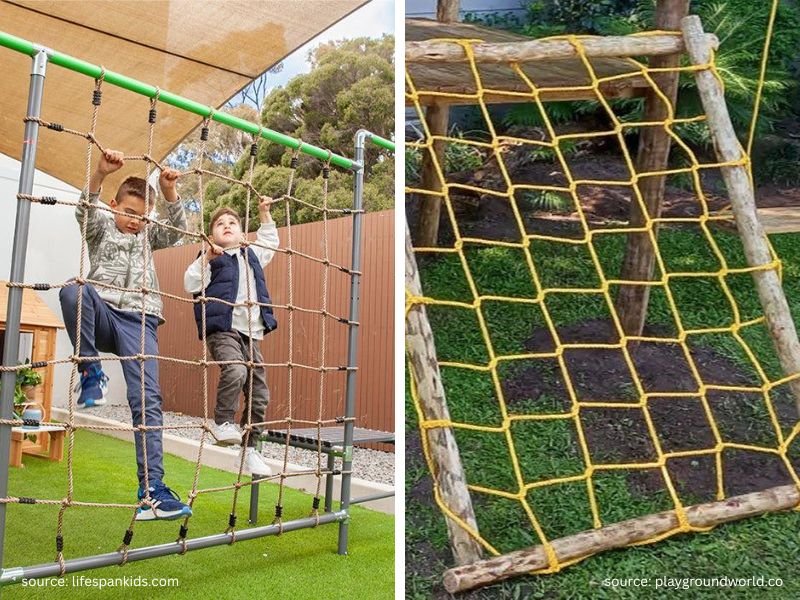
If you have two sturdy trees or posts a few feet apart, a simple rope ladder or cargo net adds a genuine climbing challenge. You can buy pre-made climbing nets affordably, or DIY one with thick outdoor rope and wooden dowels. Just be sure it’s anchored securely and set over a soft landing surface like mulch or grass, not concrete.
14. A Stage for Backyard Performances

Kids love an audience, even an imaginary one. A small raised platform (an old wooden pallet works perfectly) tucked near a shrub line or fence instantly becomes a stage for plays, dance recitals, and puppet shows. Hang an old sheet on a rope for a curtain, and you’ve got a full production venue for the price of, essentially, nothing.
A backyard stage can also be a fun addition to a children’s birthday celebration. If you’re planning a party and need more inspiration, take a look at these 20 Kids Birthday Party Ideas That Are Actually Easy for simple ways to keep little guests entertained.
15. Painted Tire Planters and Seating
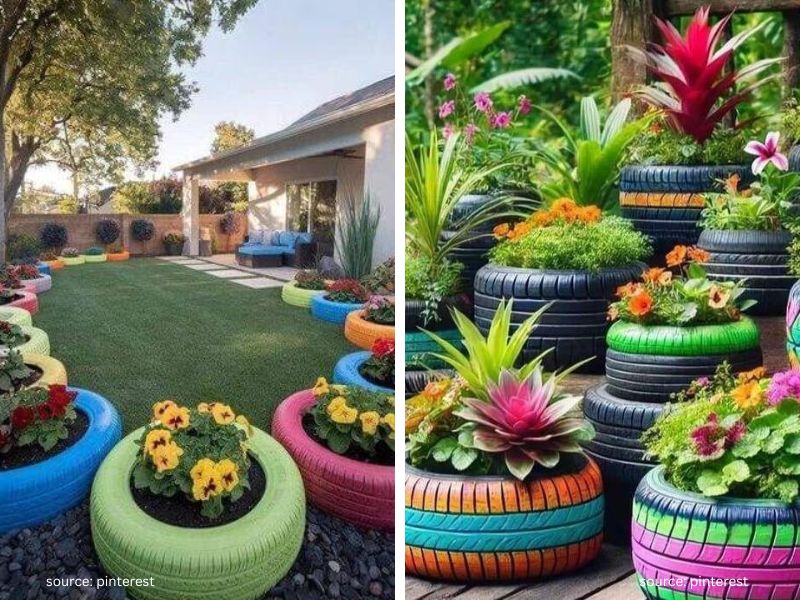
Old tires aren’t just for swings. Stack and paint them in bright, layered colors for whimsical planters, or turn a single tire into a low stool by adding a round wood cap on top. They’re weatherproof, nearly indestructible, and add a playful pop of color that ties a whole play area together visually.
Small Backyard Play Areas for Tiny Spaces
One thing I’ve learned is that Backyard Play Areas don’t need a huge lawn. Even a narrow side yard or compact patio can become a fun outdoor retreat.
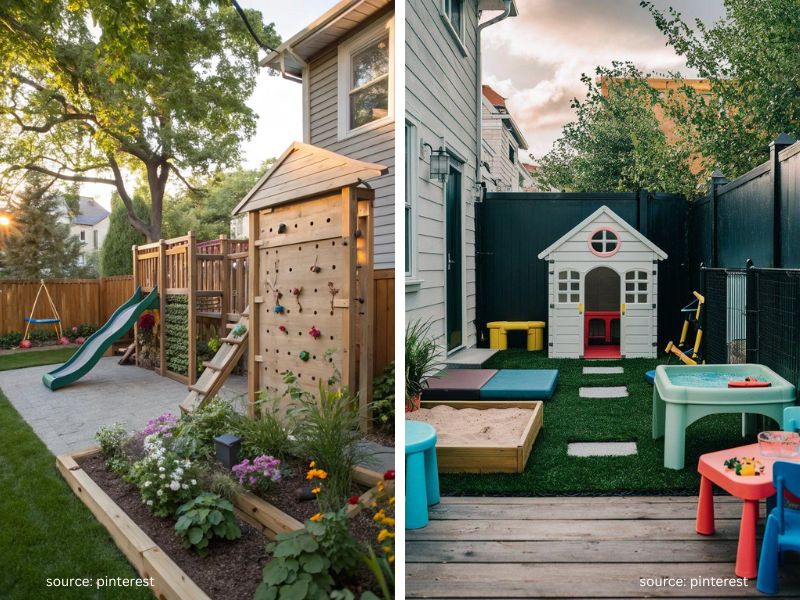
Try:
-
A wall-mounted chalkboard
-
Foldable climbing toys
-
A sensory bin station
-
Hanging planters for a vertical garden
-
A small pop-up play tent
The key is to think vertically and choose features that can be tucked away when not in use.
Natural Backyard Play Areas That Blend Into the Landscape
If you prefer a less plastic-heavy look, natural play elements are worth considering.

Simple additions include:
-
Tree stump stepping paths
-
Log balance beams
-
Sand and pebble digging areas
-
Boulder climbing spots
-
Tall grasses for hide-and-seek
Natural Backyard Play Areas tend to age beautifully and feel more integrated with the rest of the yard.
A Few Practical Notes Before You Start
A couple of things worth keeping in mind as you plan:
– **Safety first, always.** Check weight ratings on ropes and swings, inspect wood for splinters, and make sure anything elevated has a soft landing surface underneath (mulch, sand, or rubber matting all work well).
– **Shade matters.** Even a simple canopy, umbrella, or shade sail can make a huge difference in how much a space actually gets used, especially in warmer months.
– **Build in stages.** You don’t need to do all fifteen of these at once. Pick two or three zones that suit your kids’ current ages and interests, and let the space evolve as they grow.
– **Involve the kids in the process.** Even young kids can help choose paint colors or arrange loose parts. A backyard they helped build is a backyard they’ll actually want to play in.
Frequently Asked Questions About Backyard Play Areas
What is the cheapest backyard play area idea?
A mud kitchen made from reclaimed wood and household items is often the most budget-friendly option.
What is the safest surface for Backyard Play Areas?
Mulch, sand, engineered wood fiber, or rubber safety mats provide softer landings than concrete or bare packed soil.
Can I build Backyard Play Areas in a small yard?
Absolutely. Wall-mounted activities, foldable play equipment, and compact sensory stations work well in limited spaces.
How do I make a backyard play area more engaging?
Combine active play (climbing, balancing, swinging) with imaginative play (playhouses, fairy gardens, loose parts) and quiet zones for reading or drawing.
Final Thoughts
At the end of the day, the best backyard play areas aren’t the most expensive or the most polished-looking ones — they’re the ones that actually get used. A wonky, sun-bleached mud kitchen that’s been “cooked in” every single day beats a picture-perfect play set that’s outgrown in six months. Start small, build with what you have, and let the space grow messier and more loved with every season.
Which of these are you starting with first? I’d genuinely love to know — drop a comment below and tell me how your backyard transformation goes.
I hope this was helpful
Thank you for Reading!!!
With Love
Adaego
Leave a Reply